Supply chain disruptions are changing the way you pay for commercial auto insurance. When parts and vehicles cost more, your insurer’s risk rises. That means your cost of commercial auto insurance goes up. In California, where fleets operate under tight budgets and heavy regulation, this upward pressure matters.
This article aims to explain how supply-chain delays, rising replacement costs, and broader economic shifts drive the cost of your commercial auto insurance. Along with that, we’ll also provide actionable steps you can take now to help minimize the impact on your premium prices.
The Supply Chain Link to Rising Premiums
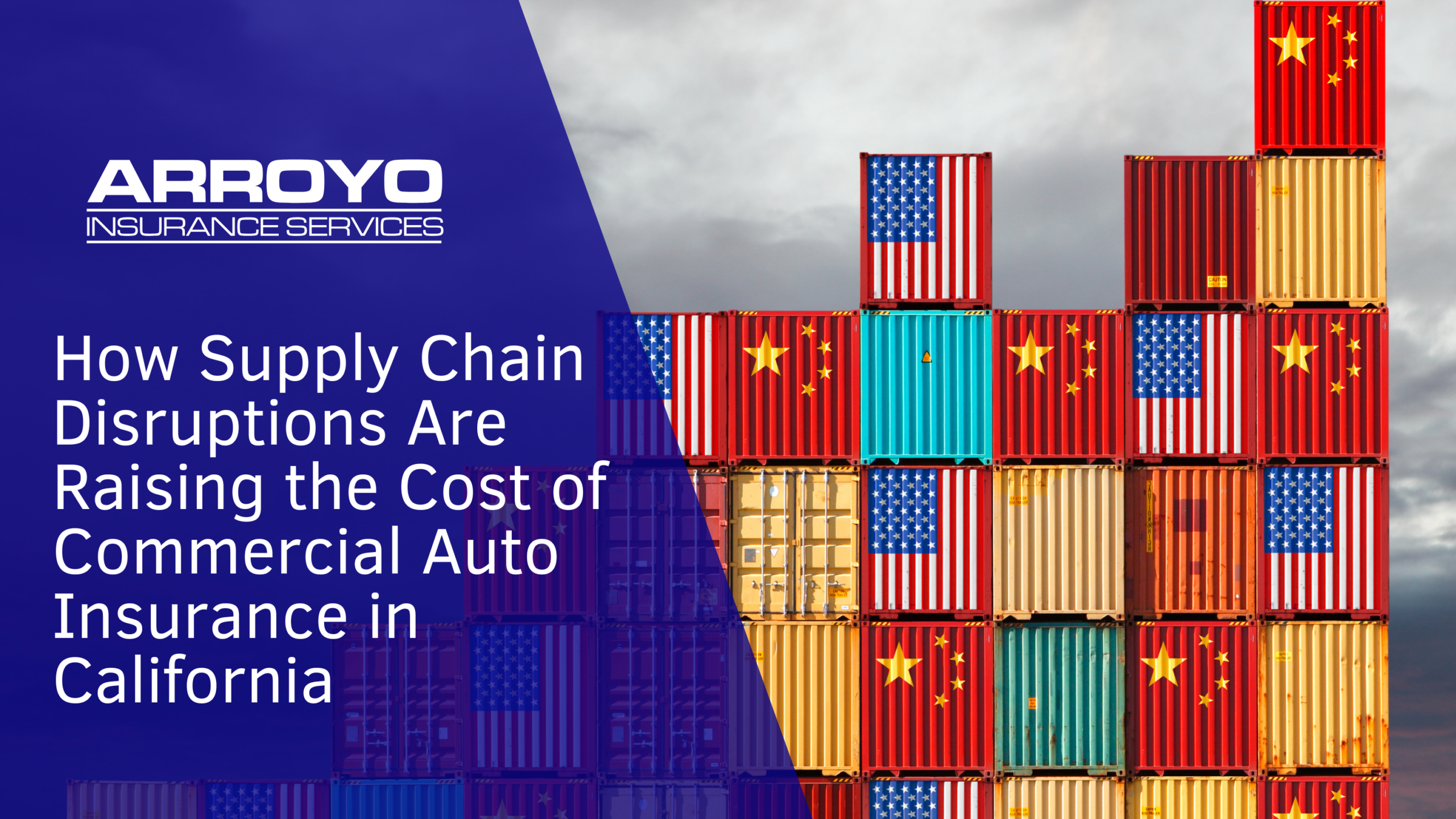
The cost of your commercial auto insurance is widely influenced by what happens after a claim. If a truck is damaged and the parts are delayed or too expensive, the insurer will have to pay more. Recent reports show that supply chain disruptions are contributing to higher claim severity.
For example:
- If tariffs increase or global delays happen, the cost of vehicle parts jump.
- Due to advanced technology in vehicles, insurers are seeing higher repair bills because replacements are more complex.
- In California, insurers may respond to these factors by raising rates, tightening terms, or reducing discounts.
The situations described above make it evident that the cost of your auto insurance is tied to more than driver records or fleet size; nowadays, it reflects any and all global supply-chain risks.
Why California Fleets Are Especially Exposed
Operating in California adds layers of risk that amplify the cost of commercial auto insurance. Some key factors are:
- California has one of the highest cost structures for repairs, parts, and labor. When supply chain disruptions hit, the incremental cost is larger.
- Regulatory and liability environments in California push insurers to expect higher payouts. That expectation drives up your premium.
- Fleets often operate near ports, major transport hubs, and heavy-traffic zones, which increases exposure to disruptions and accidents.
Because of these local conditions, California fleets may see sharper increases in the cost of commercial auto insurance compared to other states.
How Supply Chain Disruptions Drive Cost Components
When evaluating your premium, insurers will look at cost components that are all impacted by supply chain issues:
1. Increased repair and replacement costs
When parts are delayed or scarce, vehicles remain in the shop longer. This leads to increased labor time and costly parts that in consequence, raises claim severity.
2. Higher vehicle acquisition cost
In May of 2025, the Boston Consulting Group wrote about the effects of tariffs on the insurance sector. Since tariffs have risen, sourcing replacement vehicle parts becomes harder and costlier due to supply chain disruptions, making the insurer’s exposure rising as well.
3. Longer downtime and business interruption
When a fleet vehicle is out of service longer, it causes a greater loss of revenue or incurs higher logistical costs. Insurers factor that into your risk profile.
4. Stricter underwriting and fewer discounts
To control risk, carriers are leaning on raising premiums, tightening terms, or removing favorable discounts that in the past, used to soften the cost of commercial auto insurance.
Practical Steps You Can Take to Control Your Cost
While no one can control global supply-chain forces, you can influence your risk profile and mitigate your cost of commercial auto insurance.
- Update your fleet maintenance and parts sourcing plan: Use trusted suppliers, keep a healthy parts inventory, monitor lead times.
- Track downtime metrics: Quantify how long vehicles are out of service. Use that data to negotiate with insurers or choose higher deductibles if appropriate.
- Evaluate vehicle replacement strategy: Consider leasing newer vehicles with more predictable residual values or sourcing used vehicles where parts are more accessible.
- Enhance driver and fleet safety programs: Lower claim frequency and severity protects you from the higher cost environment.
- Work with your broker to review policy terms: Show your proactive risk management. Insurers reward visible controls with better pricing.
- Ask about alternative risk programs: Depending on your size, explore captives or self-insured retention that can offset premium impacts from market cost pressures.
Frequently Asked Questions
1. How much can supply chain issues raise my premium?
It varies by fleet size, vehicle type, exposure and region. Industry articles suggest repair cost inflation and parts delays may drive double-digit percentage increases in some scenarios.
2. Does this affect only large fleets?
No. Even small commercial auto operators face higher costs because parts delays and price spikes don’t spare smaller accounts. Any operation with vehicle exposure is impacted.
3. Can I negotiate a better premium even in this environment?
Yes. Your underwriting strength improves with clear data on maintenance, claims history, vehicle downtime and sourcing strategies. Showing risk control can mitigate some cost pressures.
4. Should I switch to older vehicles with simpler parts to reduce cost?
Possibly, but older vehicles may have higher repair frequency or liability risk. Ideally, you should balance total cost of ownership and parts availability. A broker help you analyze trade-offs.
Why Partnering with a Specialist Matters
Given how multi-faceted the cost of commercial auto insurance has become, it’s helpful to work with a specialist advisor. At Arroyo Insurance South Bay we focus on California commercial fleets and know how to interpret market shifts like supply chain disruptions. We help you tailor coverage, track metrics, and position your business for better renewal results.
If you’d like to review how your business is positioned given the current environment, schedule a call with us today. We help California businesses adapt their commercial auto programs to keep cost manageable and coverage strong.